


A few years ago, most hospitals and clinics treated social media as an afterthought — maybe a few festival greetings and a doctor's photo on Diwali. That's changed completely.
Today, patients scroll through Instagram reels to understand a symptom, check a hospital's Google reviews before booking an appointment, and decide whether to trust a doctor based on how that doctor shows up online.
This is exactly why social media marketing for healthcare brands has become a core part of patient acquisition, not just a branding exercise. Whether you run a single clinic, a multi-specialty hospital, or a solo medical practice, the way you show up on social platforms now directly affects footfalls, appointment bookings, and how much patients trust you before they even walk through your door.
In this blog, we'll break down what's actually working for healthcare brands on social media in 2026 — not generic advice, but practical direction you can use this quarter.
Healthcare isn't like selling shoes or software. People are searching for reassurance, not just information. A single wrong claim or an overly promotional tone can damage credibility instantly. That's why a good healthcare social media strategy needs to balance three things at once: education, empathy, and evidence.
Unlike e-commerce or retail brands, healthcare content also has to survive scrutiny — from patients, from peers, and often from regulatory bodies. This means your content team can't just chase trends; they need at least a working understanding of what's medically accurate and what's safe to say publicly.
Agencies experienced in healthcare marketing usually build this compliance layer into their content process from day one, rather than fixing it after a post goes live.
Reels and Shorts continue to dominate reach in 2026. Doctors explaining a common condition in under 60 seconds, quick myth-vs-fact clips, or a walkthrough of "what happens during your first visit" consistently outperform static posts. Video makes complex medical topics feel approachable, and it gives patients a face to trust before they ever step into the clinic.
More healthcare marketing teams are using AI tools to draft captions, repurpose long-form content into shorts, and speed up scheduling. But the brands winning trust in 2026 still have a doctor or clinical reviewer sign off before anything goes live. AI helps with speed; it doesn't replace medical accuracy.
Healthcare brands are shifting focus from vanity metrics to genuine engagement — replying to comments, running Q&A sessions, and encouraging patients to ask questions in DMs. A smaller, engaged following that actually books appointments is worth far more than a large, passive one.
Patients don't want to leave Instagram to search your website separately. Clinics that add direct "Book Now" links, WhatsApp chat buttons, and appointment forms inside their bio or posts are converting social traffic faster. This is where a well-built website and clear service pages make a real difference — social media brings attention, but a smooth landing experience is what converts that attention into a booked patient.
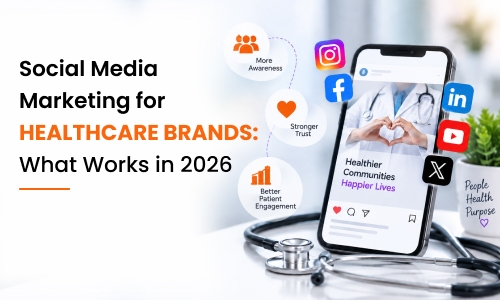
Not every platform deserves equal effort. Instagram remains the strongest channel for visual, educational content and works well for clinics, dermatologists, dentists, and specialty practices. Facebook still matters for reaching an older patient demographic, especially for general physicians and family clinics. LinkedIn is underused by most healthcare brands but works extremely well for hospital leadership, doctor personal branding, and B2B partnerships. YouTube continues to be valuable for longer explainer content and patient testimonials that build long-term trust.
The mistake most healthcare brands make is spreading themselves across every platform with mediocre content, instead of picking two or three and doing them consistently well. A focused social media marketing approach almost always outperforms a scattered one.
Some formats consistently perform well for hospitals, clinics, and individual doctors:
The common thread across all of these is that they answer a real question a patient already has. Content built this way naturally supports your website's content marketing efforts too, since strong social posts can be expanded into blog articles that rank on Google.
Compliance isn't optional in healthcare marketing, and it shouldn't be treated as a checkbox exercise either. Whether you're following India's medical advertising norms, platform-specific health content policies, or general guidelines around patient privacy, a few practices go a long way:
Brands that build compliance into their workflow early tend to face far fewer issues with takedowns, platform flags, or credibility damage later. It's one of the reasons healthcare clients often prefer working with an agency that understands both marketing and the sensitivities of the sector, rather than a generalist team.
Followers and likes look good on a report, but they don't pay the bills. The metrics that actually matter for a healthcare brand include:
Tracking these consistently — ideally tied to your SEO and website analytics — gives a far more honest picture of ROI than follower growth alone.
A few patterns show up again and again with healthcare clients who come to us after a disappointing social media run:
Most of these are fixable with a proper content calendar, a clear approval process, and a team that treats social media as part of a larger digital marketing system rather than a standalone activity.
At Gephels, we work with hospitals, clinics, and individual doctors to build social media strategies that are compliant, consistent, and genuinely built to bring in patients — not just impressions. Our approach typically includes:
We've worked closely with doctors, clinics, and hospitals across India to build this kind of system, and we understand how different this space is from standard consumer marketing.
Three to five posts a week across your main platform is a realistic starting point, along with daily Stories or short updates if you have the bandwidth. Consistency matters more than frequency.
Instagram and Facebook generally work best for patient-facing content, while LinkedIn is valuable for hospital leadership visibility and B2B relationships.
Yes, but only with clear written consent, and it's best to avoid sharing specific medical details unless the patient explicitly agrees to it.
Organic content builds trust over time, but paid promotion helps reach new patients faster, especially for specific services or new clinic launches.
Most healthcare brands start seeing meaningful engagement and enquiry growth within three to six months of consistent, well-planned activity.
If your clinic or hospital's social media feels inconsistent, or you're simply not seeing patients come in from it, let's fix that together.
Book a free consultation with our team and we'll walk you through a strategy built specifically for your specialty and patient base.
Of course you do! So let’s work together. Get in touch to receive your free website audit, including recommendations on how to improve the SEO and conversion rate of your website.
Get your growth Audit